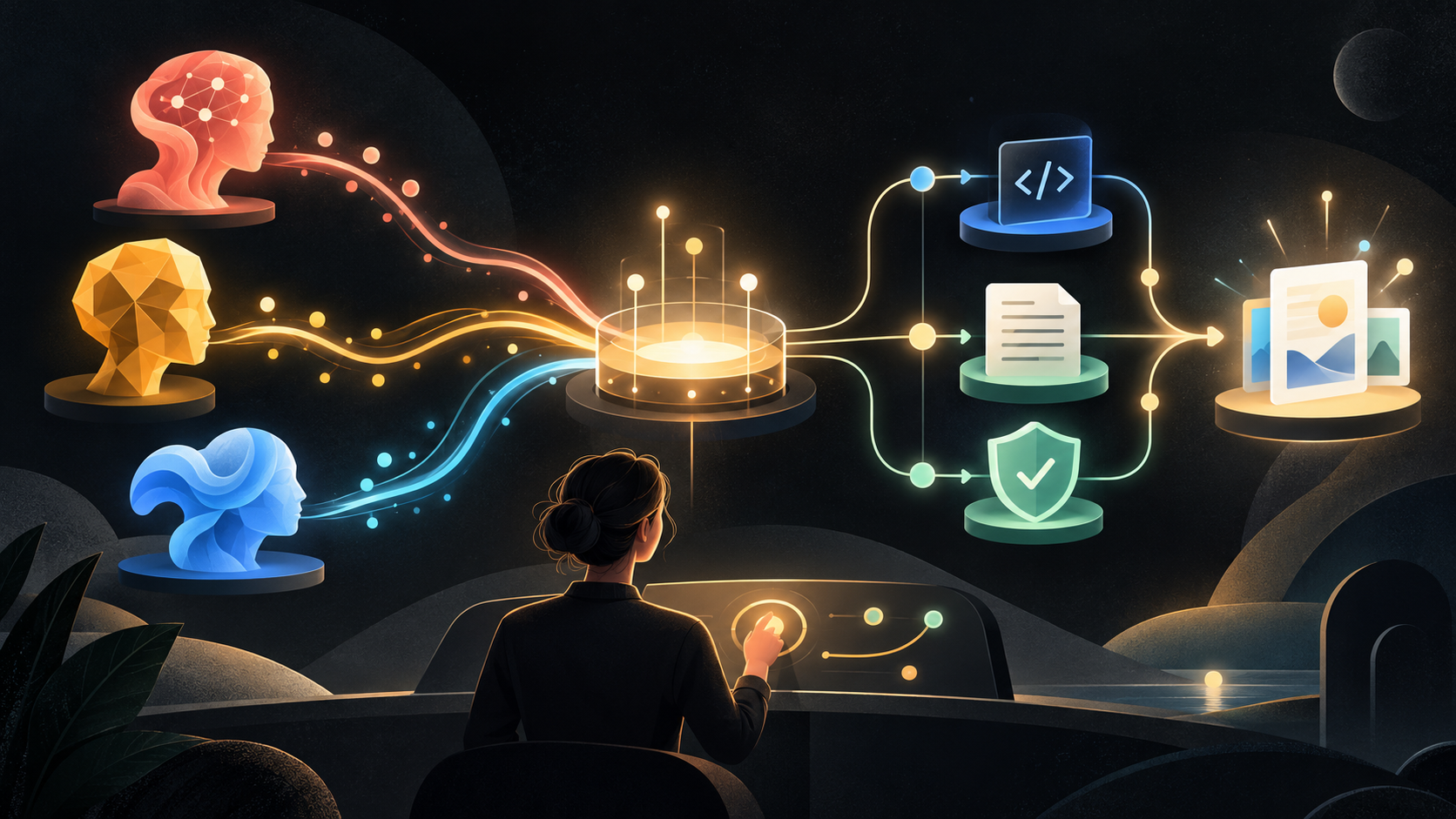
The model is the engine — not the whole car
When we talk about AI, most attention goes to model names and benchmark results. Yet a model that is expected to do real work also needs instructions, memory, the right tools, a safe execution environment and rules for when a human should take over.
Microsoft calls this surrounding layer a harness: an orchestration framework around the model. On 28 October, the company introduced the Microsoft Copilot harness and said it would be available through Microsoft Foundry.
The same underlying idea already powers products including Copilot Code, Copilot Studio and GitHub Copilot across its app, command-line interface and VS Code. Developers and organisations can now use the layer to build agent-based workflows of their own.
A conductor for several models
The most interesting part is that the design does not tie every task to a single AI model. Microsoft says the harness can work with more than 20 leading models, as well as models that an organisation connects with its own key.
That enables a more mature way of using AI: let a fast, inexpensive model sort material, a stronger reasoning model tackle the hard problem, and a specialised model review code or images. The orchestration layer can choose the route, supply relevant context and connect tools only when they are needed.
It also supports open building blocks such as MCP, agent skills and plugins. That matters because tools and instructions can be moved more easily between environments instead of being rebuilt from scratch each time.
Why does this matter beyond developers?
For now, this is primarily a platform for developers and organisations — not a new button suddenly appearing in ordinary Copilot. But the direction is likely to shape how everyday AI services work.
Users may not have to choose a model for every small task. We will describe the goal, while the service selects an appropriate combination of model, tools and review steps. That could make AI both less expensive and more dependable, provided those choices remain understandable and auditable.
It also suggests a useful principle for today: do not judge an AI tool only by the model behind it. Ask which sources it may read, which actions it may take, how its work is checked and when you get to approve the next step.
The encouraging shift
AI development is becoming less about making one model the best at everything. An ecosystem is emerging in which several models can cooperate under human direction.
That sounds less dramatic than another record-breaking benchmark — but for anyone seeking practical value from AI, the harness around the model may become just as important as the model itself.